
Inside the O Museum at The Mansion: D.C.’s Labyrinth of Secret Doors, Art, and History
Tucked away in Washington, D.C.’s Dupont Circle neighborhood, the O Museum at The Mansion stands as one of the nation’s most unconventional cultural institutions. Spanning five interconnected 19th-century townhouses, the venue offers an immersive blend of history, music, and interactive exploration. What appear to be simple historic townhouses hide one of the most unique experiences you’ll find in the D.C. area.
Indeed, this was the case when we made our visit to the complex space this summer. After a sunny stroll along O Street, we found a row of townhouses that looked fairly unassuming. The only giveaway that there was anything hidden behind these doors were the unique pieces of decor and small signage indicating we had arrived at our destination.
A Historic Campus Built on Secret Passageways
According to the O Museum’s site, the building was imagined in 1892 by Edward Clark, an architect for the U.S. Capitol, and the original interconnected row houses initially served as private residences before transforming over the decades into safe houses and student hubs. Founder H.H. Leonards acquired the property in 1980, reconnecting the buildings to create a sprawling 100-plus-room complex connected by over 80 secret doors and hidden passageways.
Visitors can easily get lost inside the labyrinthian complex of stairways, hidden doors, and narrow corridors beckoning them with unique artifacts and findings. If not for our guide, Z (who grew up in the space and had countless stories and tips to share), we easily could have found ourselves lost among the maze of paintings, books, and collectible items.
Hands-On Discovery Across Theme Rooms
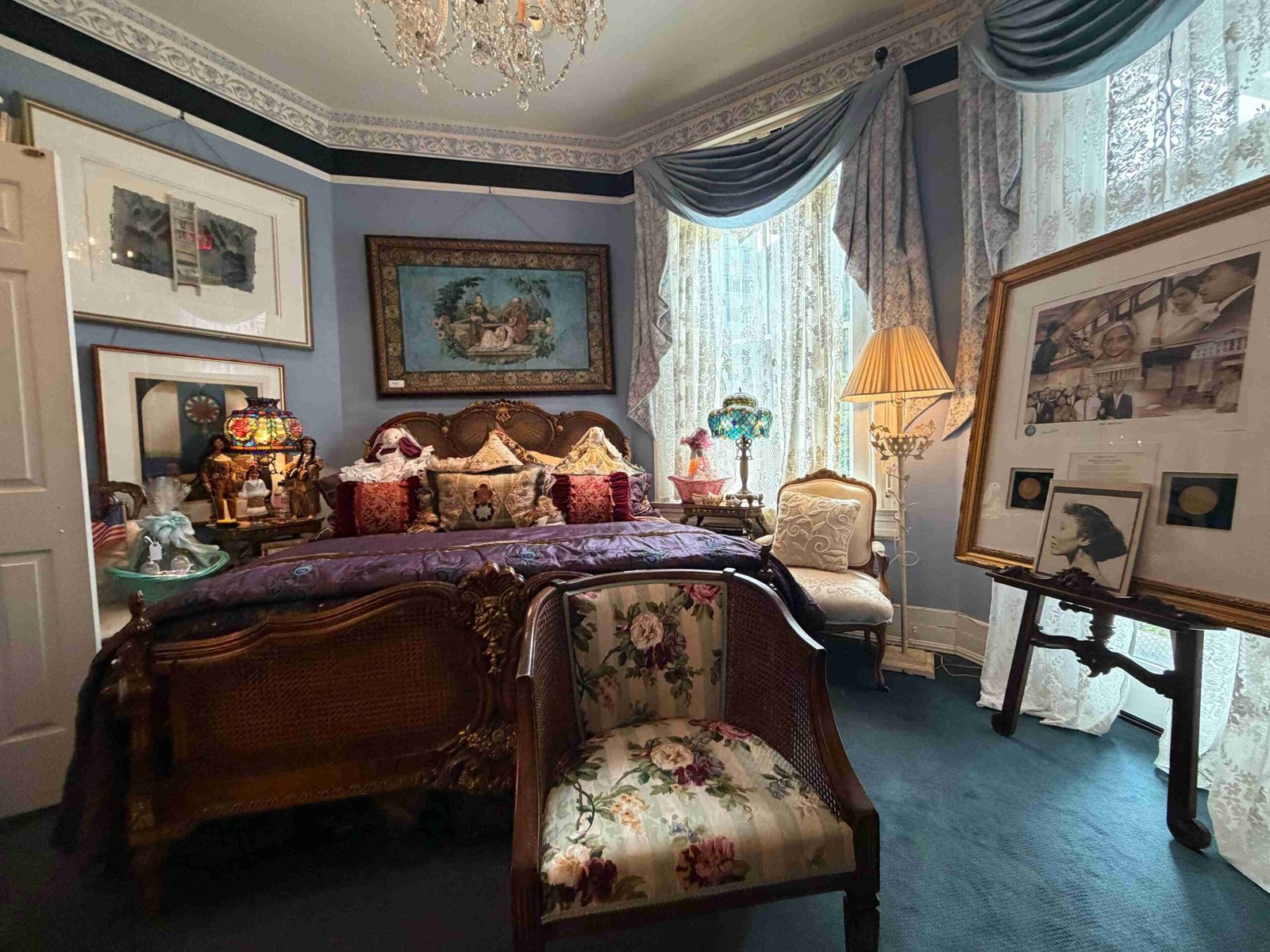
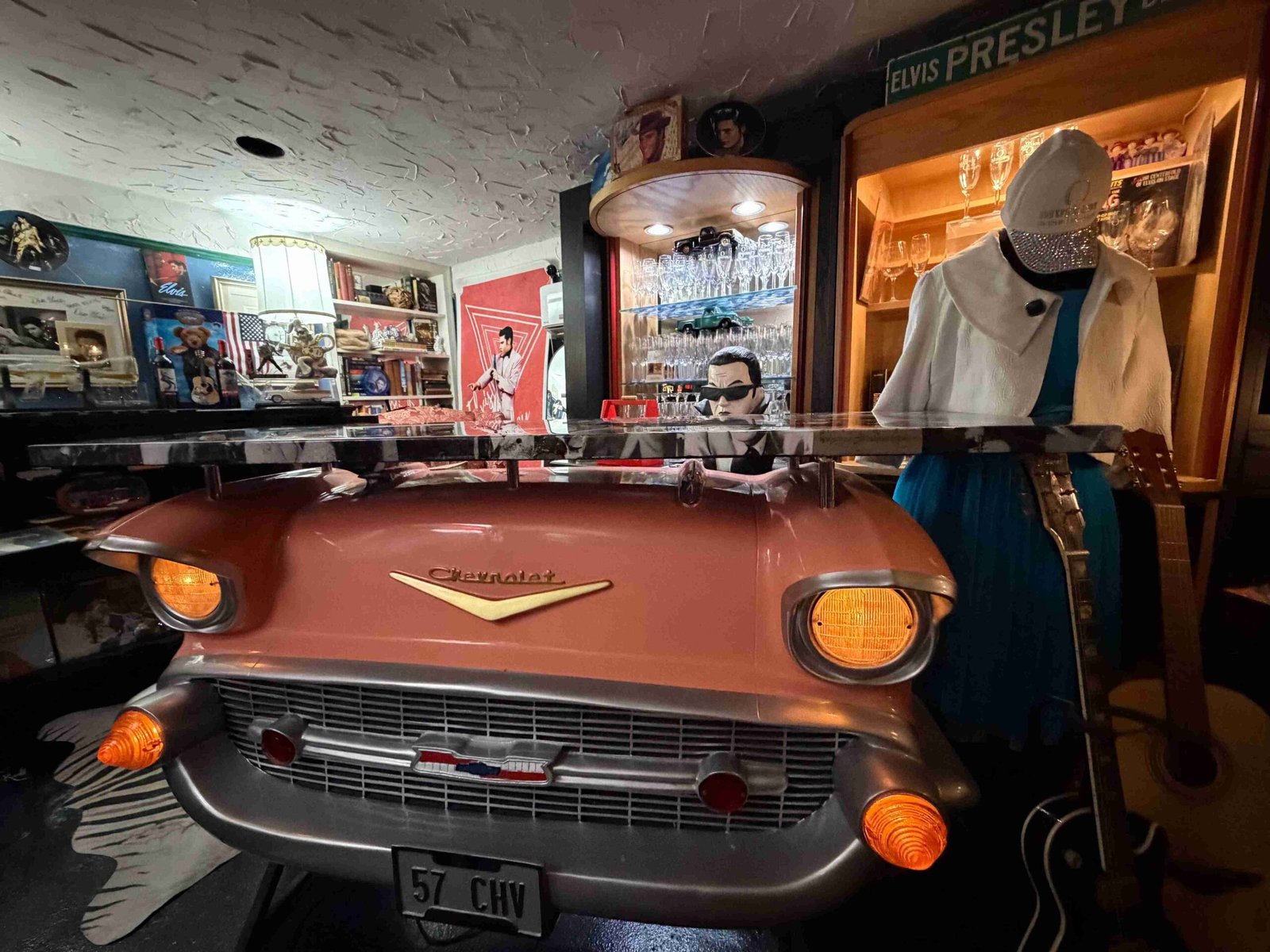
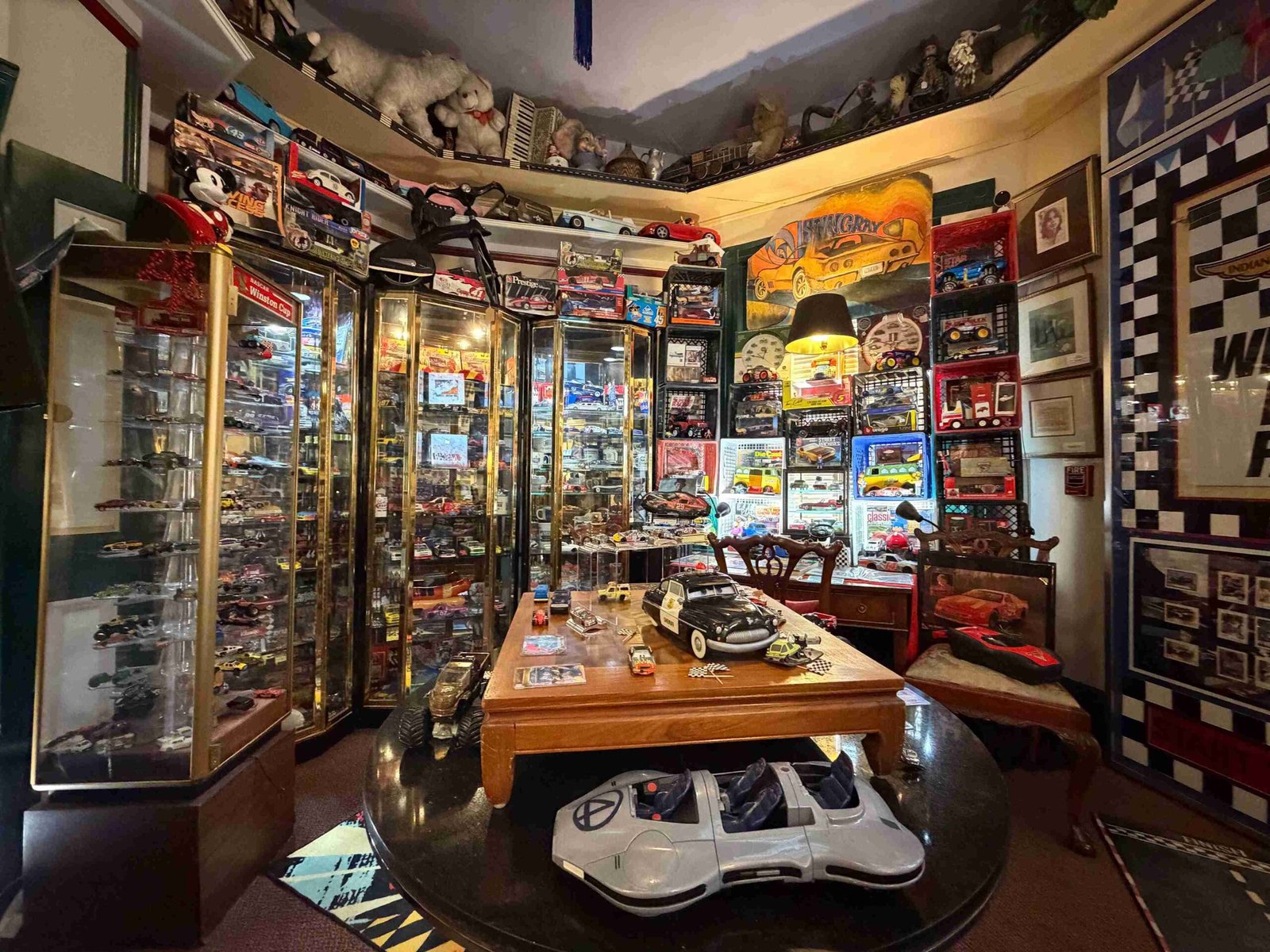
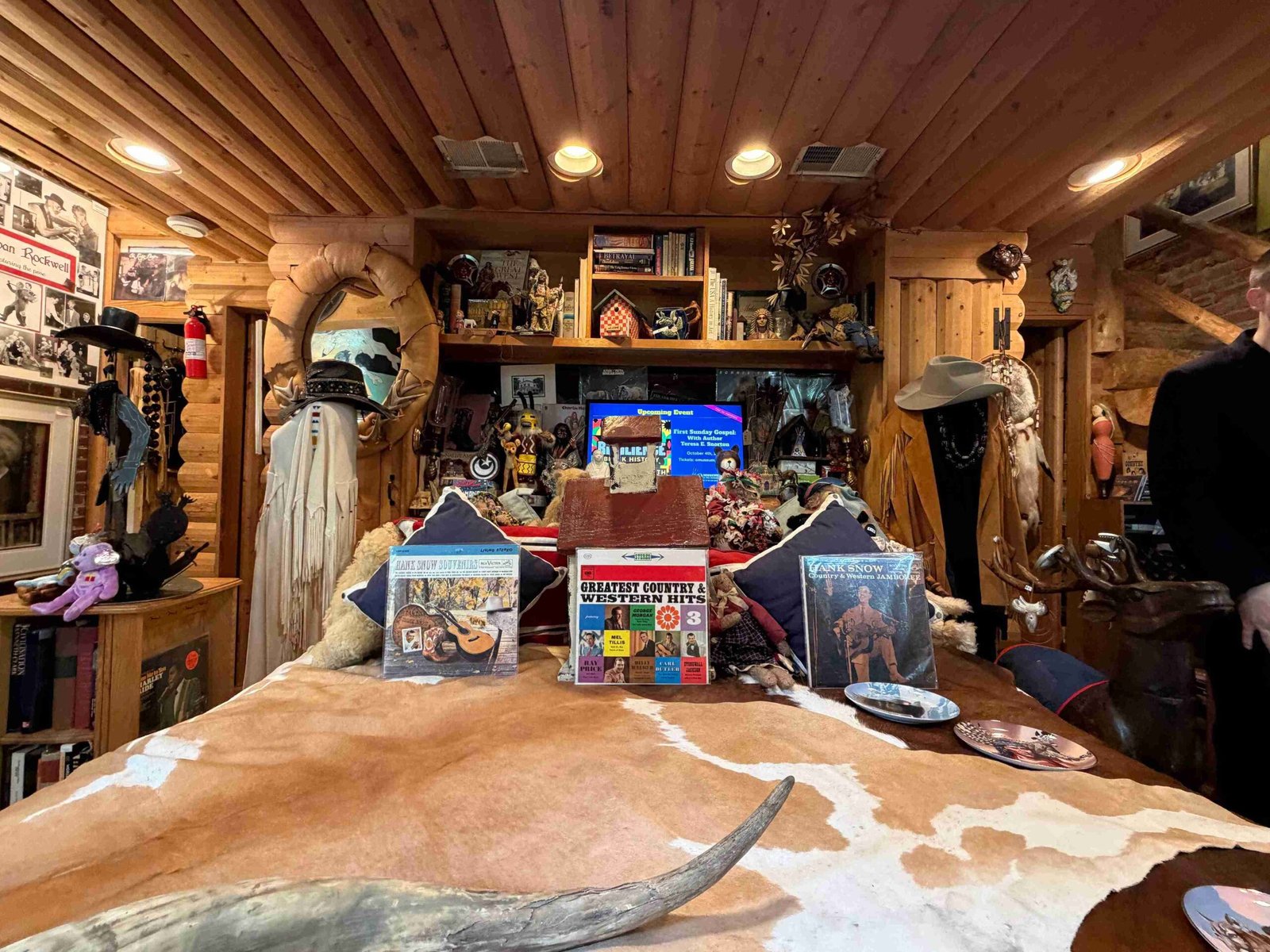
Unlike traditional museums bounded by velvet ropes, O Museum at The Mansion encourages guests to engage with their surroundings physically (and they do). Visitors navigate a maze of themed spaces—ranging from the rustic two-story Log Cabin and the Safari Room to dedicated music suites featuring vintage instruments, signed guitars, and rare Beatles memorabilia. Make sure to set aside a few hours for your visit—you won’t want to rush.
Almost everything on display throughout the estate is available for purchase, making the collection an ever-evolving gallery where no two visits are identical. Our guide even mentioned that he is frequently finding new items and artifacts he’s never seen before (we witnessed this for ourselves when he opened a door and a massive Pillsbury Dough Boy stood within the closet for the first time).
We also watched video testimonials and stories of visitors who had found lost or sold items from their home upon visiting the museum. Finding one single piece is akin to finding a needle in a haystack. Though many of the rooms are themed (like the Elvis room and the John Lennon room), items are scattered throughout the entire space, so you could wander for hours marveling at every piece.
Living History and Civil Rights Legacy
Beyond its eclectic art and architectural quirks, O Museum at The Mansion holds a deeply meaningful place in American history. Civil rights icon Mrs. Rosa Parks made The Mansion her home in the nation’s capital for over a decade. During her time at the property, Mrs. Parks hosted friends, dignitaries, and monthly gospel gatherings.
Today, guests can visit her dedicated third-floor suite, which houses signed letters, personal mementos, and artifacts honoring her life, leadership, and enduring impact on social justice. This one room was perhaps our favorite room of the whole experience—which says a lot considering the staggering number of rooms we toured.
Cultural Programs, Concerts, and Treasure Hunts
Operating 365 days a year, the venue acts as a multi-faceted hub for creative expression, intimate lodging, and community events. The museum also operates from time to time as a hotel, as many of the rooms are available for guests to stay and enjoy. Some of the rooms are completely blocked off with longterm visitors who have opted to prolong their time at the museum.
Self-guided scavenger hunts challenge guests to navigate the sprawling estate in search of hidden doors, rare books, and specific historic artifacts scattered across the rooms. According to the museum’s website, the venue regularly hosts live songwriting sessions, acoustic concerts, and artist retreats that fill the historic spaces with music.
Additionally, community programming brings together authors, scholars, and activists for intimate discussions and educational forums. By fusing historic preservation with whimsical, hands-on exploration, the O Museum at The Mansion remains a captivating destination for travelers seeking a world beyond standard museum displays.