
Rising above the National Mall, the Washington Monument is more than a landmark you photograph and move on from. It is a symbol of the nation’s origins, a feat of 19th-century engineering, and one of the most powerful vantage points in Washington DC. Whether you are visiting for the first time or returning with fresh eyes, the Washington Monument rewards travelers who slow down and take the time to understand its story.
Washington Monument: A Timeless Icon of the National Mall
The Washington Monument stands as a poignant and magnificent tribute to George Washington, the nation’s first president and a central figure in American history. Completed in 1884, the monument remains the tallest stone obelisk in the world, soaring 555 feet above the Reflecting Pool and anchoring the city’s monumental core.
Unlike ornate memorials nearby, the monument’s clean lines and stark white marble give it a quiet authority. Its simplicity is intentional, reflecting Washington’s reputation for restraint, leadership, and civic duty.
A Monument Decades in the Making
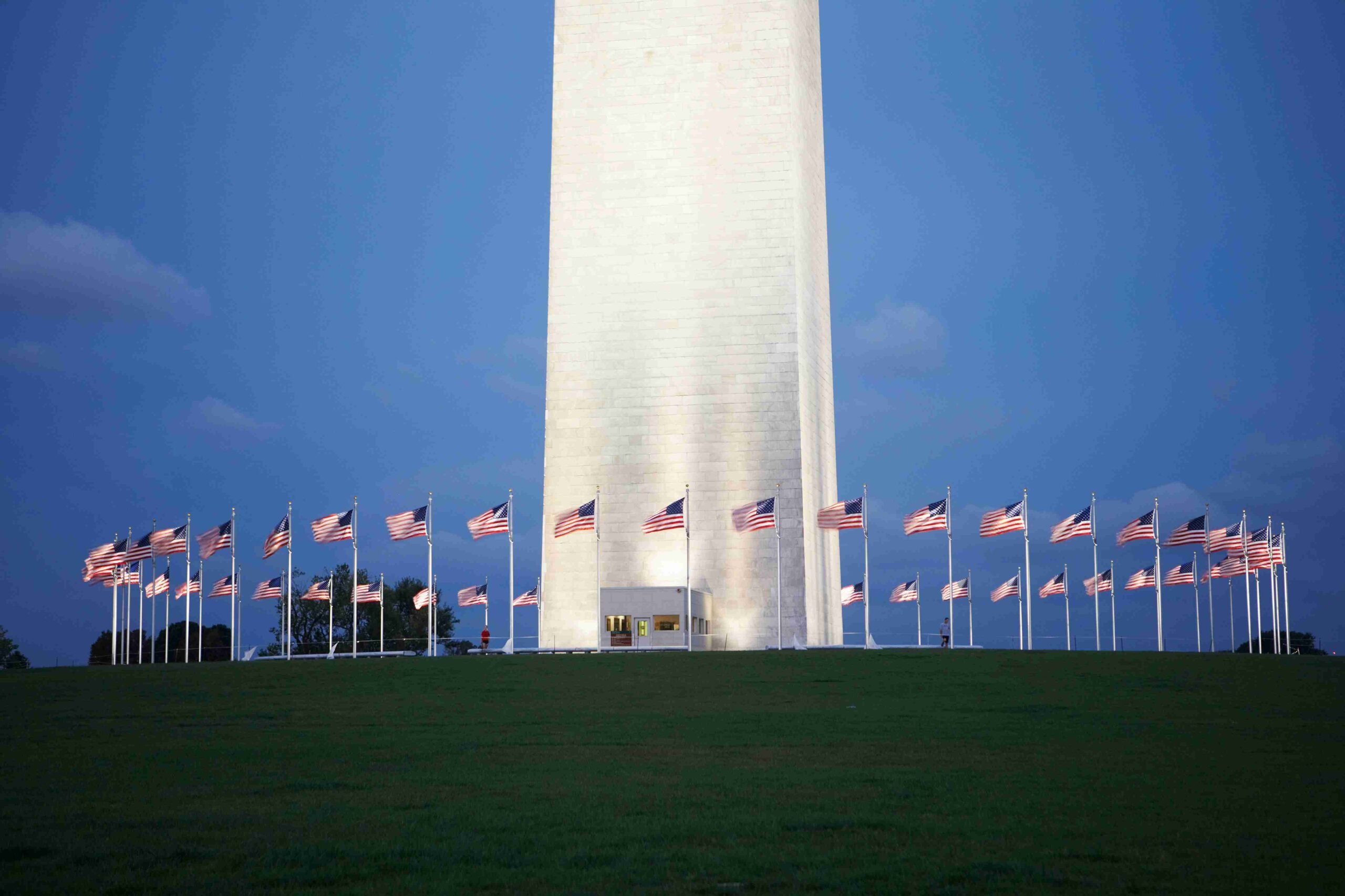
Construction on the Washington Monument began in 1848 but was interrupted for more than two decades due to funding issues and the Civil War. The pause is still visible today, marked by a subtle color change in the stone about one third of the way up the structure.
The monument was ultimately completed using marble from multiple quarries, creating a layered exterior that tells the story of a nation growing, fracturing, and reuniting. This visual detail is easy to miss from afar but adds depth to the monument’s meaning when viewed up close.
Visiting the Washington Monument Observation Deck
One of the most memorable experiences in Washington DC is ascending the Washington Monument. Timed entry tickets allow visitors to ride an elevator to the observation level, where panoramic windows offer sweeping views of the city.
From the top, landmarks align with deliberate precision. You can look west toward the Lincoln Memorial, east to the United States Capitol, and north to the White House. This alignment reflects the careful urban planning that shaped Washington DC and reinforces the monument’s role as the city’s geographic and symbolic center.
The National Park Service manages free tickets, though reservations are strongly recommended during peak travel seasons.
The Monument at Ground Level
Even without going inside, spending time around the Washington Monument is essential. The surrounding lawns are ideal for walking, picnicking, and reflection, especially during sunrise and sunset when the light softens the marble and the crowds thin.
The monument is also a central stop along the National Mall, making it easy to pair with visits to nearby institutions like the National Museum of American History and the National Museum of Natural History. Its open setting allows visitors to experience it from multiple angles, each offering a different sense of scale and perspective.
Nighttime Views and Seasonal Highlights
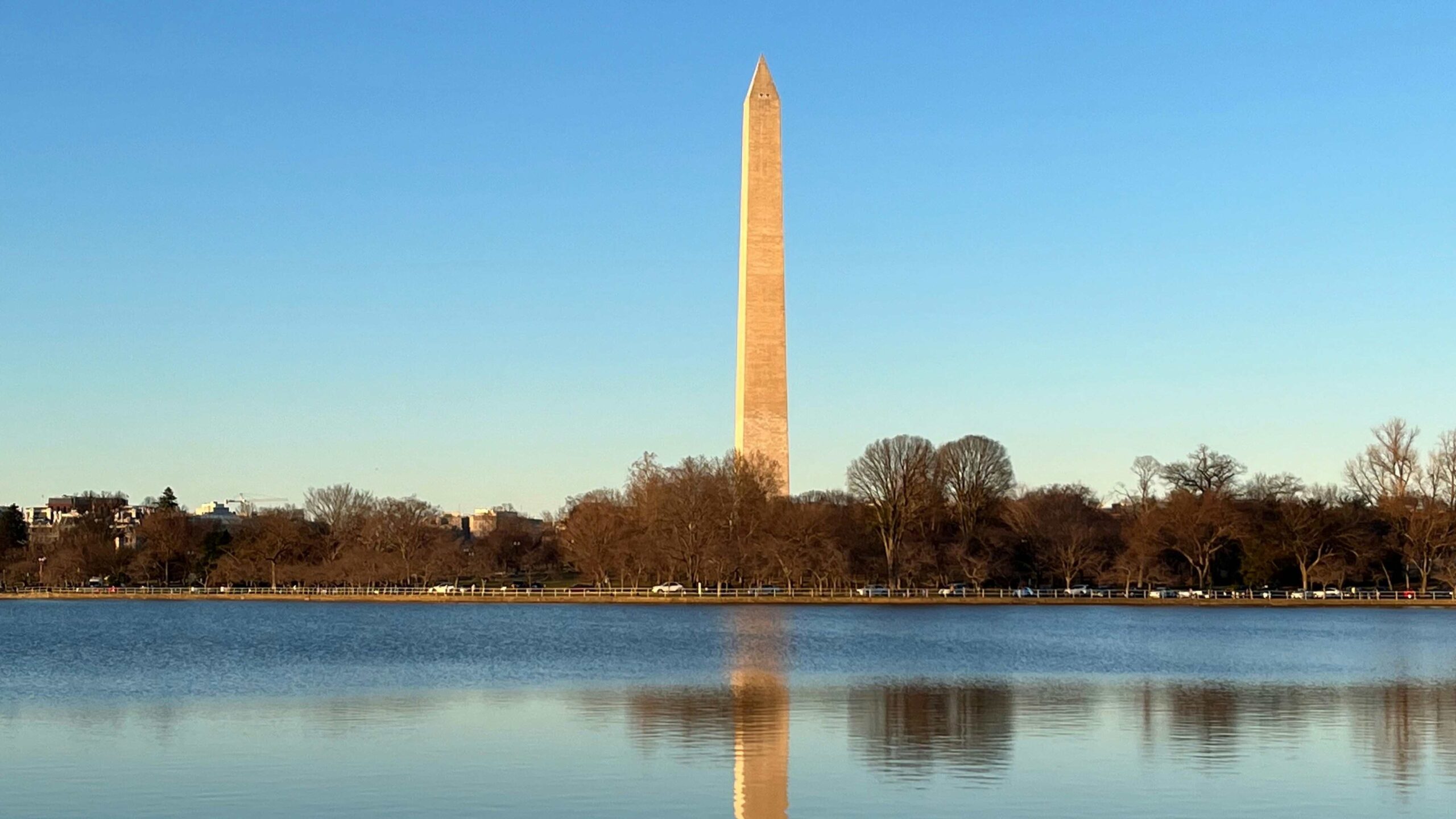
At night, the Washington Monument takes on a different presence. Illuminated against the dark sky, it feels both monumental and serene, mainly when reflected in the nearby pools. Evening walks around the monument are quieter and often more atmospheric than daytime visits.
Seasonally, the monument becomes a backdrop for some of the city’s most iconic moments. Spring brings cherry blossoms framing its base, summer fills the lawns with festivals and gatherings, and winter adds a rare sense of stillness after snowfall.
Why the Washington Monument Still Matters
The Washington Monument endures not because of ornamentation or spectacle, but because of what it represents. It honors leadership without excess, permanence without grandeur, and history without distraction.
In a city filled with powerful symbols, the Washington Monument remains one of the most essential. It is not just something you see on the way to somewhere else. It is a place to pause, look outward across the capital, and understand the city from its very center.